
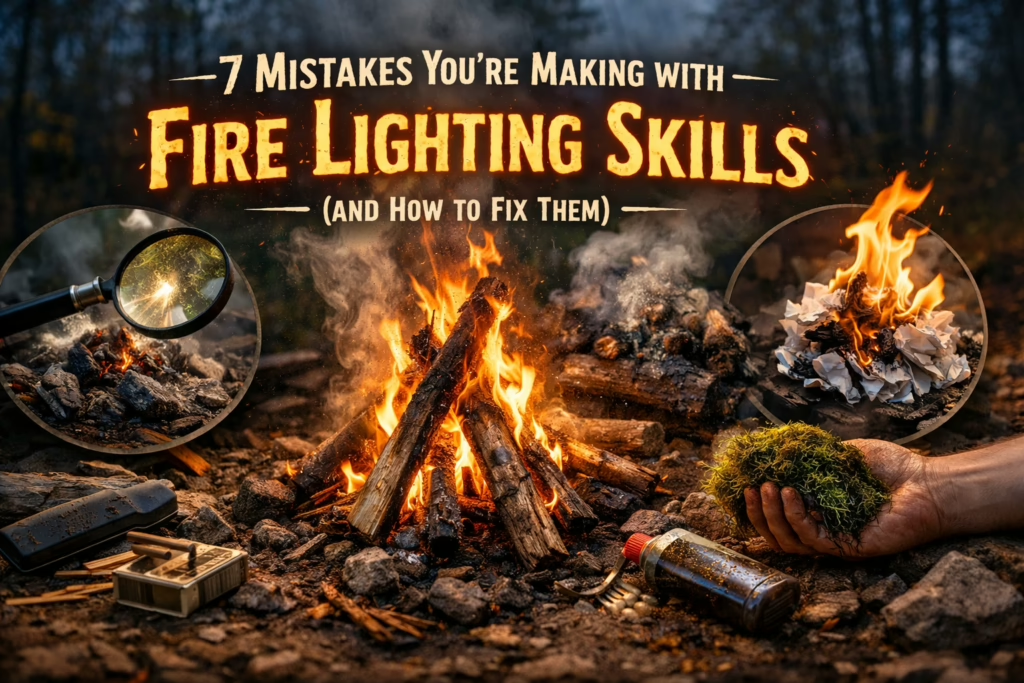
Fire is more than a luxury. It is the heart of the campsite. It provides warmth, purifies water, and cooks your food. In a survival situation, it is your greatest psychological ally. Yet, many people struggle to get a flame dancing. They strike, they blow, they swear, and they fail.
You’ve been there. We’ve all been there.
Mastering fire lighting skills takes more than a lighter and a prayer. It requires an understanding of physics, biology, and patience. Most beginners: and even some seasoned hikers: make the same fundamental errors. These mistakes turn a relaxing evening into a cold, frustrating battle against the elements.
At Devon and Cornwall Bushcraft, we see these habits every day. The good news? They are easy to fix. Stop fighting the wood and start working with it.
Here are the 7 biggest mistakes you’re making with your fire lighting skills and exactly how to fix them.
1. You Are Using Wet or "Green" Wood
Wet wood is a fire killer. This is the most common mistake in the British outdoors. You find a fallen branch, it looks solid, but it won't take a spark. Instead, it hisses. It steams. It produces a thick, acrid smoke that stings your eyes.
When you try to burn wet or "green" (freshly cut) wood, the fire’s energy is wasted. It isn't creating heat; it's boiling off water. Your flame dies because it cannot reach the ignition temperature of the wood fibers. You are literally trying to burn water.
How to fix it:
Always look for "standing deadwood." This is wood that has died but stayed off the damp ground. It is seasoned by the wind and sun. If you must use wood from the floor, peel back the bark. If it feels cool or damp to the touch, move on.
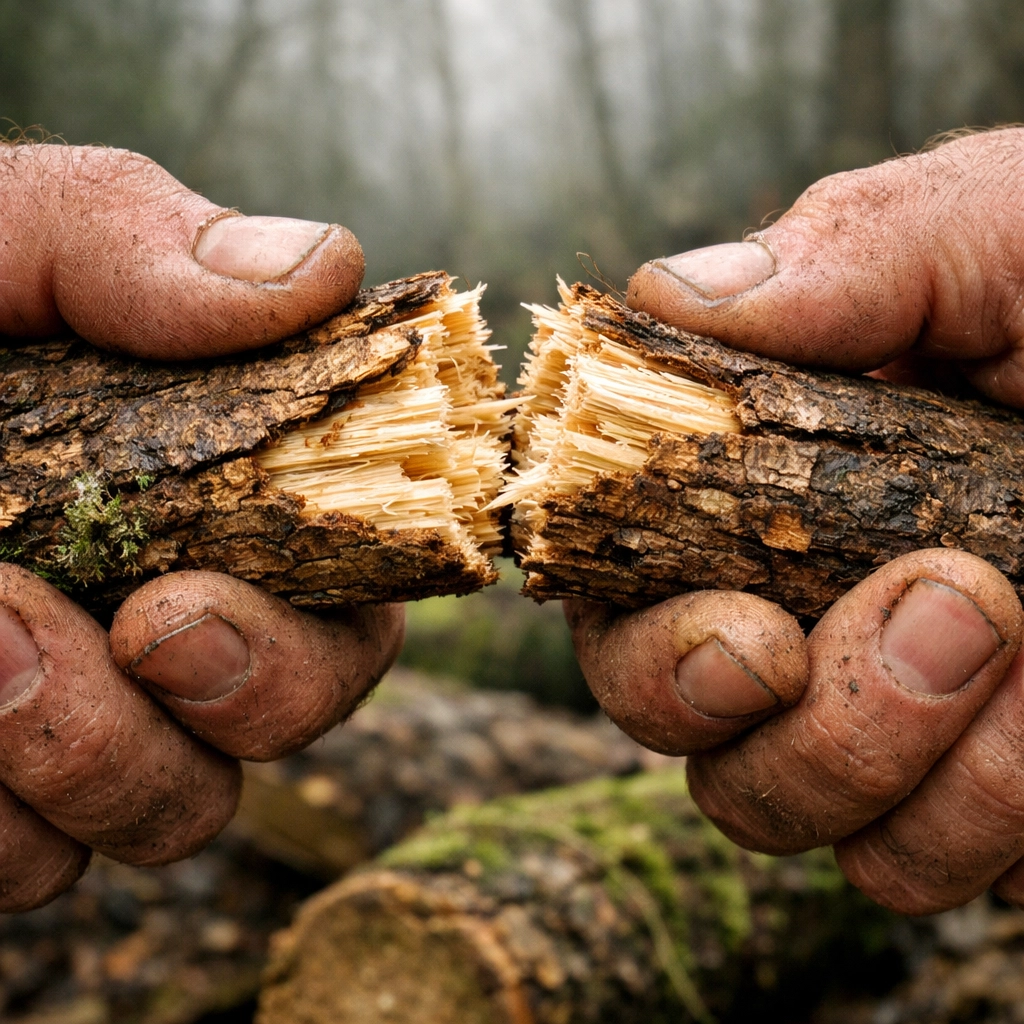
Use the "snap test." Dry wood snaps with a sharp, clean crack. Wet wood bends or thuds. If you want to take your wood processing to the next level, check out the Bahco Laplander Saw & Knife Set. It allows you to process the dry inner heartwood of larger logs, which is a game-changer for your bushcraft skills.
2. You Are Skipping the Fire-Building Stages
Fire is a hierarchy. You cannot light a log with a match. It sounds obvious, but people try it anyway. They throw a handful of leaves under a pile of heavy branches and wonder why the flame disappears in thirty seconds.
A fire needs to grow in three distinct stages: tinder, kindling, and fuel. If you skip a step, the "heat bridge" collapses. The energy from your match or spark isn't enough to raise the temperature of the next layer.
How to fix it:
Follow the Rule of Thumbs.
- Tinder: Think hair-thin. Birch bark, dried grass, or processed fatwood. This catches the initial spark.
- Kindling: Think matchstick to pencil thickness. This catches the flame from the tinder.
- Fuel: Think thumb-thickness and larger. Only add this once your kindling is a roaring mass of heat.
Gather more than you think you need. A common rule in survival skills training: gather your tinder and kindling, then double it. You don't want to be hunting for wood once the flame is lit.
3. You Are Packing the Wood Too Tightly
Fire needs to breathe. Oxygen is one of the three pillars of the fire triangle. If you pack your wood in a tight, dense pile, you are suffocating the flame. You might get a small flicker, but it will quickly turn into a smoldering, black mess.
Air needs to flow through the base and up through the structure. Heat rises. If there is no gap for that heat to pull fresh oxygen behind it, the combustion stops.
How to fix it:
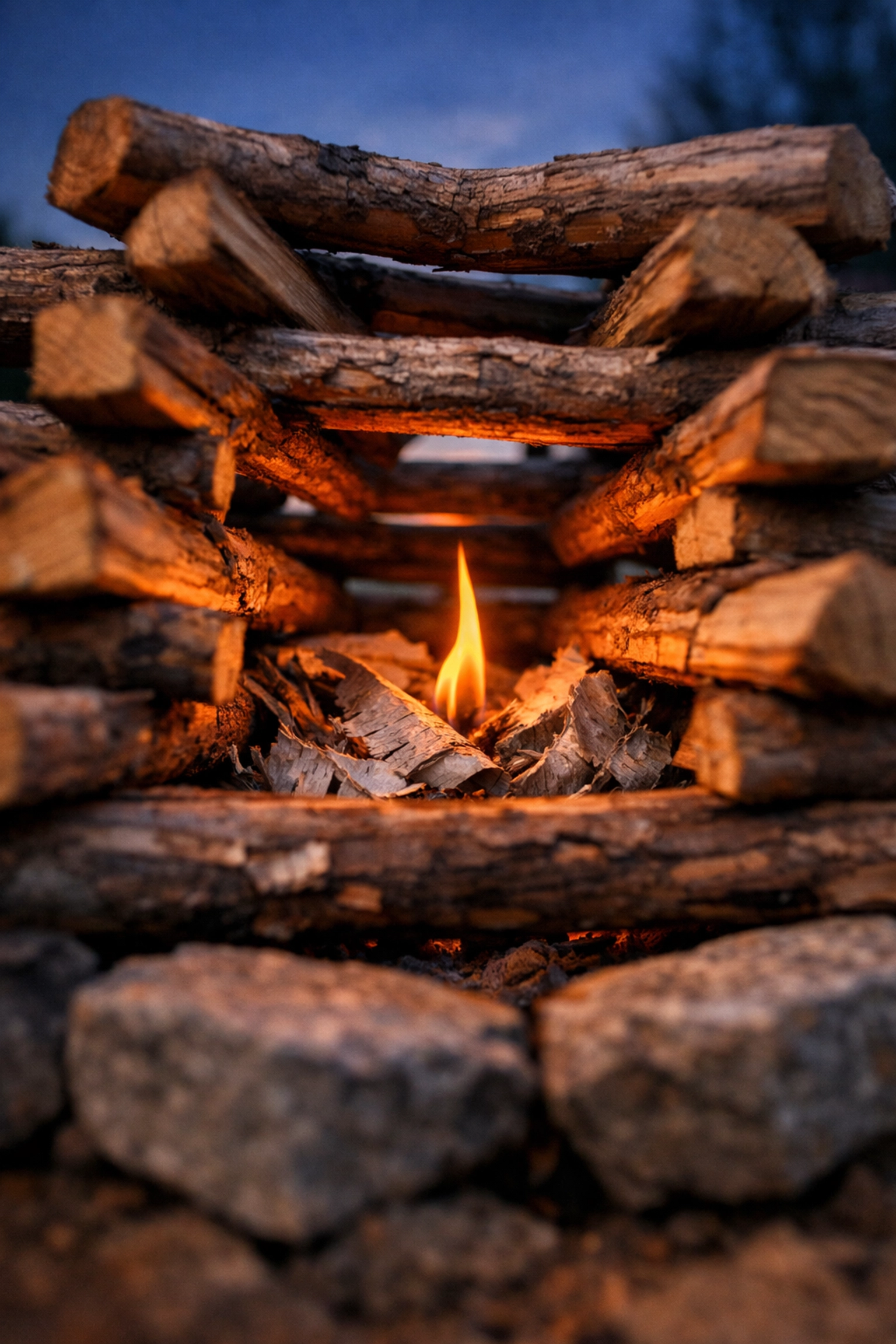
Build for airflow. Use a "teepee" or "log cabin" structure. These designs create a natural chimney effect. Leave gaps between your sticks. A good rule of thumb is to leave enough space for a small bird to fly through the structure.
If your fire is struggling, don't just add more wood. Instead, use a stick to create an air channel at the base. Give it room to live.
4. You Are Spacing Kindling Too Far Apart
Heat must be shared. While you need airflow, you also need proximity. If your kindling sticks are spaced three inches apart, the flame from one will never reach the other. The heat dissipates into the air instead of pre-heating the adjacent fuel.
This is the "lonely stick" syndrome. One stick cannot sustain a fire; it needs its neighbors to bounce heat back and forth.
How to fix it:
Keep your initial pile compact. Your tinder should be nestled directly against your smallest kindling. As the fire grows, the heat will radiate. Think of it like a conversation; people need to be close enough to hear each other, but not so close they can't breathe.
Start tight, then expand outward as the core temperature rises.
5. You Are Building on Cold, Damp Ground
The earth is a heat sponge. If you build your fire directly on wet mud or frozen soil, the ground will suck the thermal energy right out of your tinder. You are fighting the thermal mass of the entire planet.
In the UK, the ground is rarely truly dry. Even in summer, moisture sits just below the surface. This moisture turns to steam, which rises through your fire and kills the flame from below.
How to fix it:
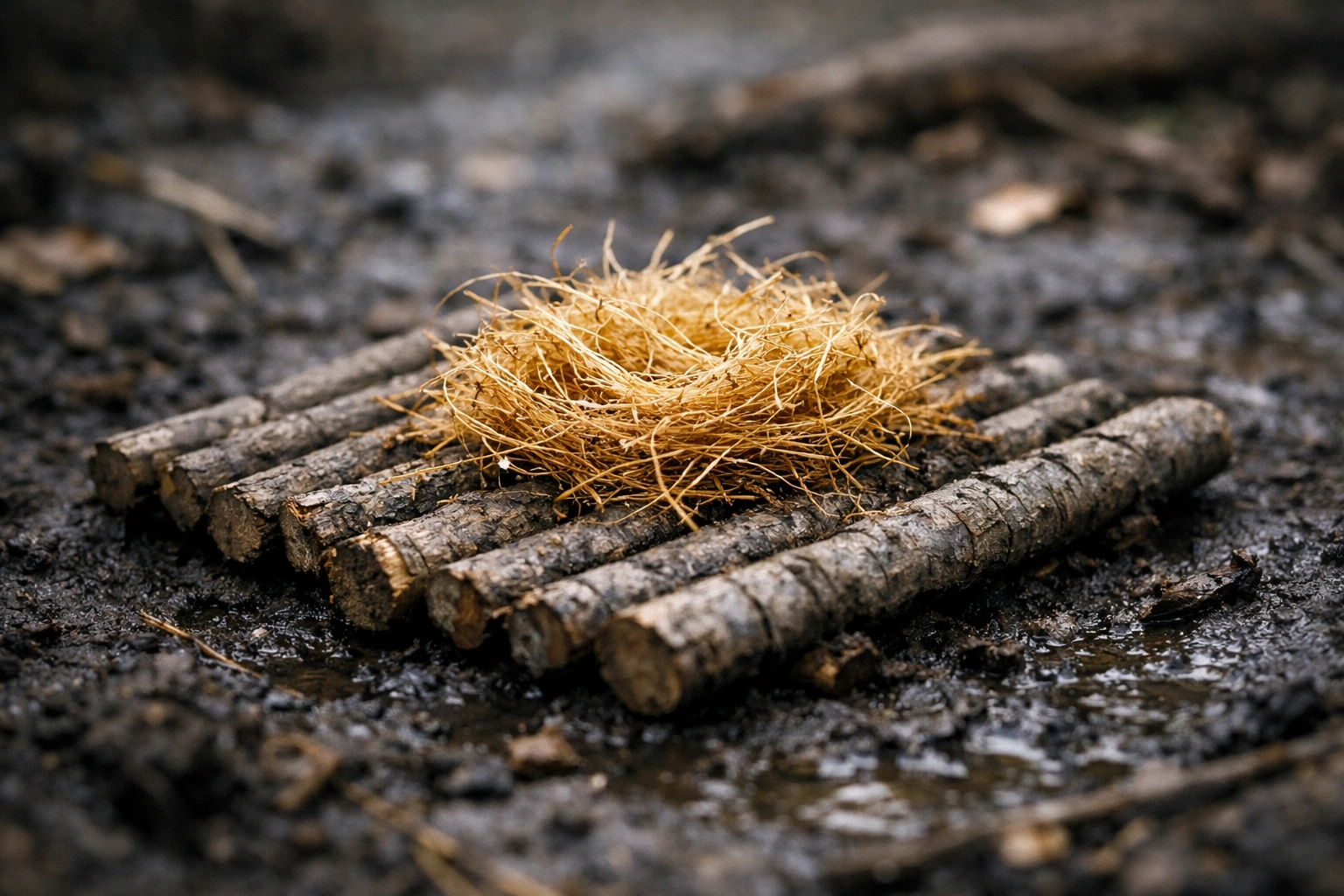
Build a platform. Lay down a "raft" of thick, dry sticks or a flat rock before you start your fire. This creates an insulating layer between the damp earth and your delicate tinder. This simple step can increase your success rate by 50% in wet conditions. It’s a core principle we teach in our bushcraft courses.
6. You Are Poking and Prodding Too Much
Patience is a tool. Many people get "fidgety fingers" the moment they see a flame. They start poking the embers, moving the logs, and blowing aggressively into the heart of the fire.
Every time you move a stick in a young fire, you break the "heat bed." You separate the pieces that were successfully sharing energy. You risk collapsing the structure and smothering the coals in ash.
How to fix it:
Set it and forget it: mostly. Once you have a solid flame, step back. Let the fire establish its own "micro-climate." The only reason to touch a fire is to add fuel or to gently consolidate the embers if they have burnt out.
If you must blow on the fire, do it low and slow. A long, steady breath is better than short, sharp puffs. Think "bellows," not "birthday candles."
7. You Are Relying on Luck, Not Prep
Preparation is 90% of fire lighting. Most people start striking their ferro rod before they have even finished gathering wood. They get a spark, it hits the tinder, it burns for ten seconds, and then they realize they don't have any small sticks nearby. They scramble, the flame dies, and they have to start over.
In a survival situation, this isn't just annoying; it’s dangerous. It wastes calories and mental energy.
How to fix it:
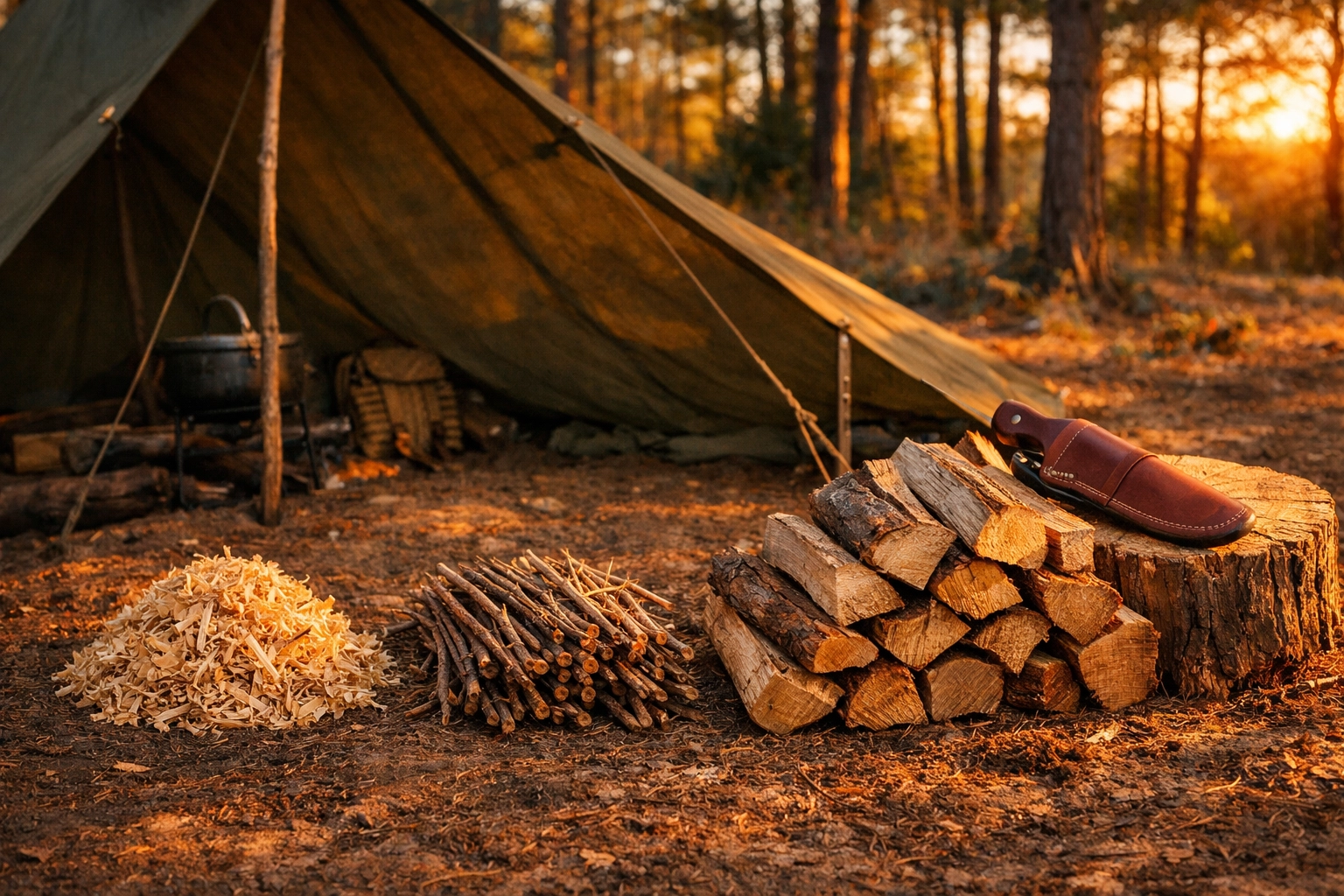
Don't strike a match until your "wood yard" is organized. Have your tinder ready. Have three piles of kindling (small, medium, large) within arm's reach. Have your main fuel logs stacked nearby.
Check out our Bushcraft Blog for more tips on organizing your workspace. A tidy camp is a successful camp.
Level Up Your Bushcraft Skills
Fire lighting is a perishable skill. You can read about it all day, but nothing beats hands-on experience under the guidance of an expert. Whether you want to master the friction fire, learn to use a ferro rod in the rain, or understand the ecology of the woods, we are here to help.
At Devon and Cornwall Bushcraft, we offer a range of immersive experiences. From our Bushcraft Club for regular practitioners to specialized courses and events for beginners, we provide the environment you need to build confidence.
Stop guessing. Start knowing.
Ready to master the flame?
Contact us today to find out about our upcoming sessions or browse our shop for the best gear to get you started.
Fire is a gift. Treat it with the respect it deserves, and it will never let you down. See you in the woods!
